Case Study 04 · AI Product Build
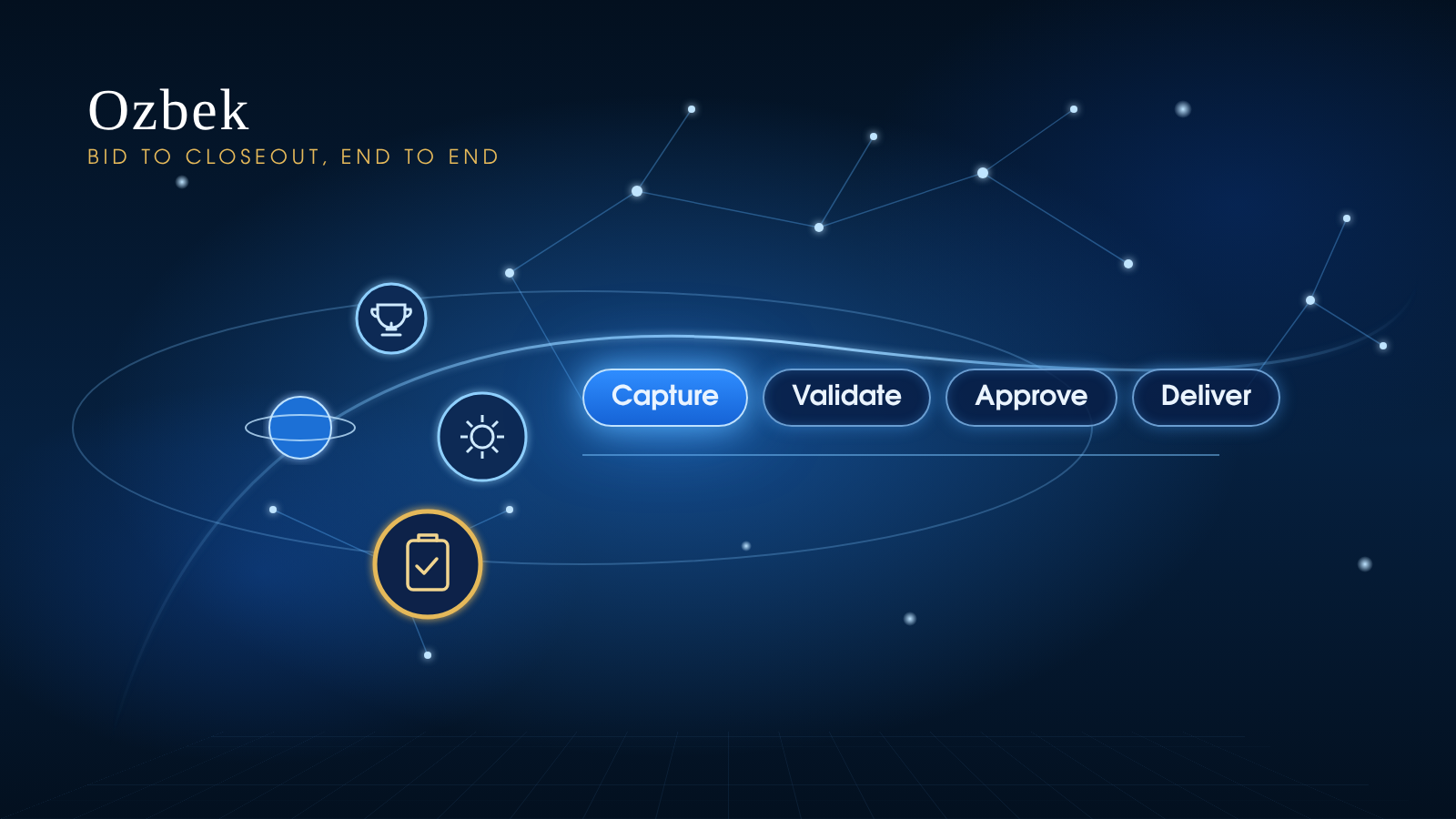
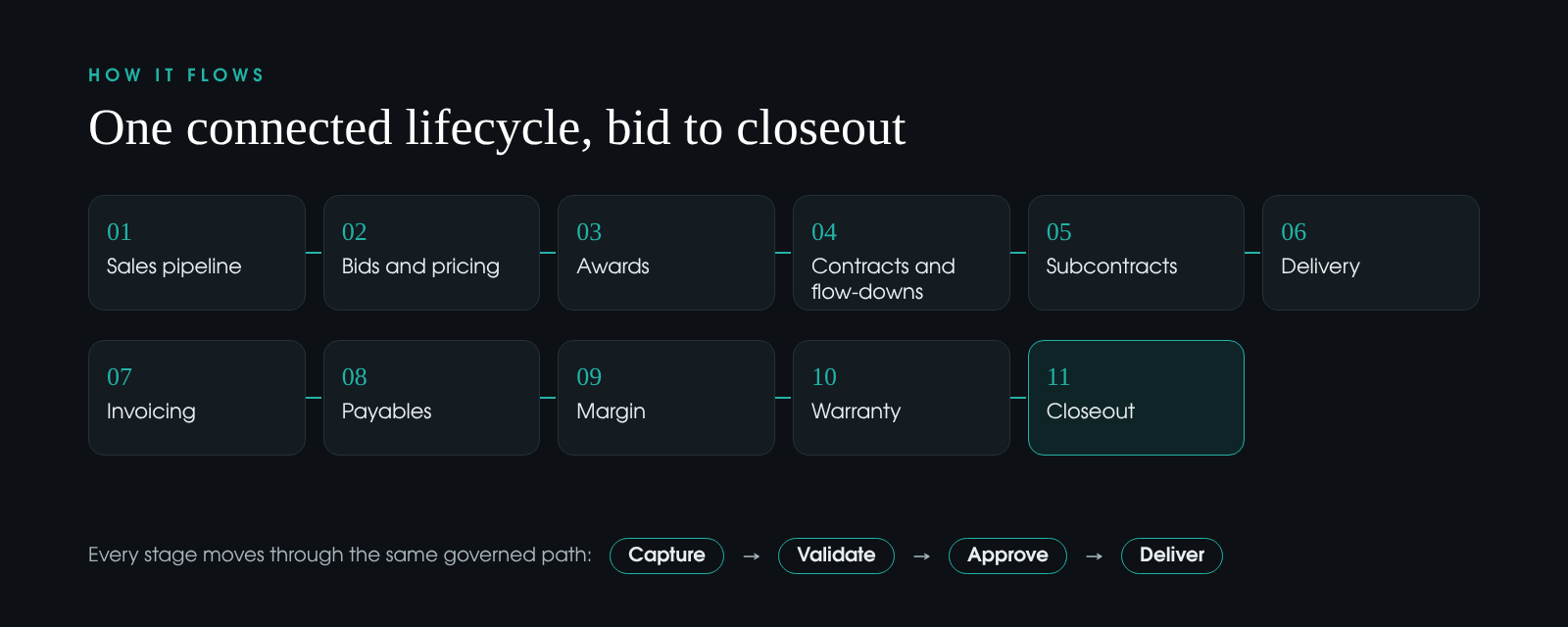
Federal and commercial revenue work moves through a long chain of hands: pipeline, pricing, awards, flow-downs, subcontracts, delivery, invoicing and closeout. I'm designing and building Ozbek with AI-assisted development so that entire chain lives in one platform, with governance and regulatory checks built into every step.
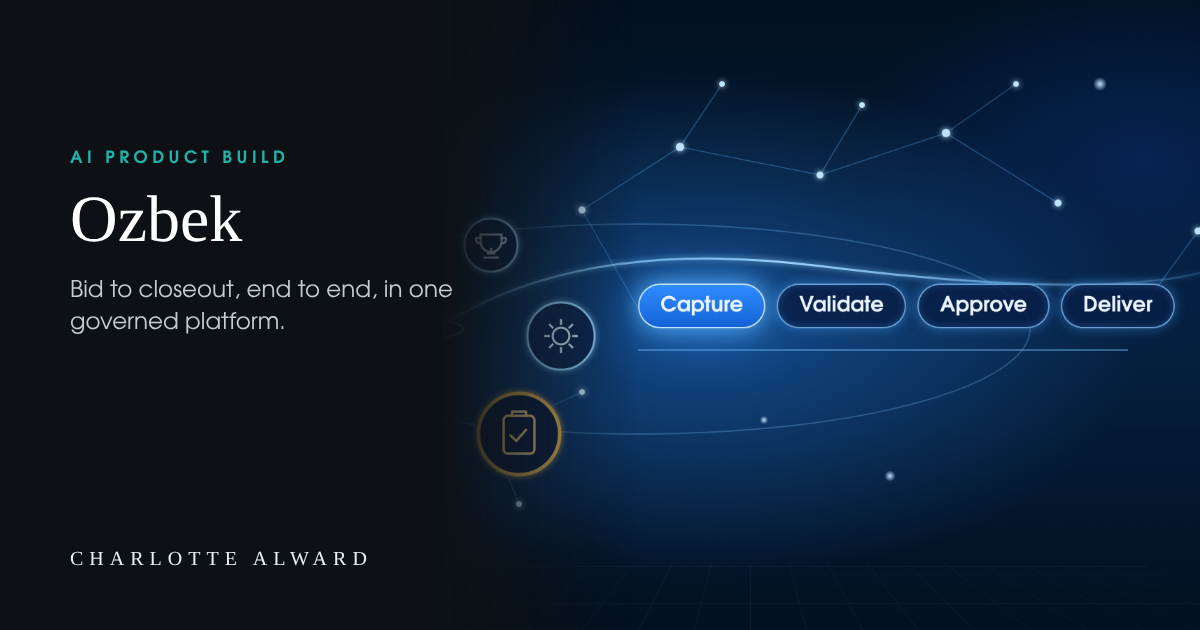 2:33
Start here · Narrated overview
One platform from first opportunity to final closeout: sales, bids, contracts, suppliers, delivery, billing and support, with governance and regulatory checks built into every step.
Watch the overviewThe deep dives
A three-part narrated walkthrough following a single fictional federal deal through the entire platform.
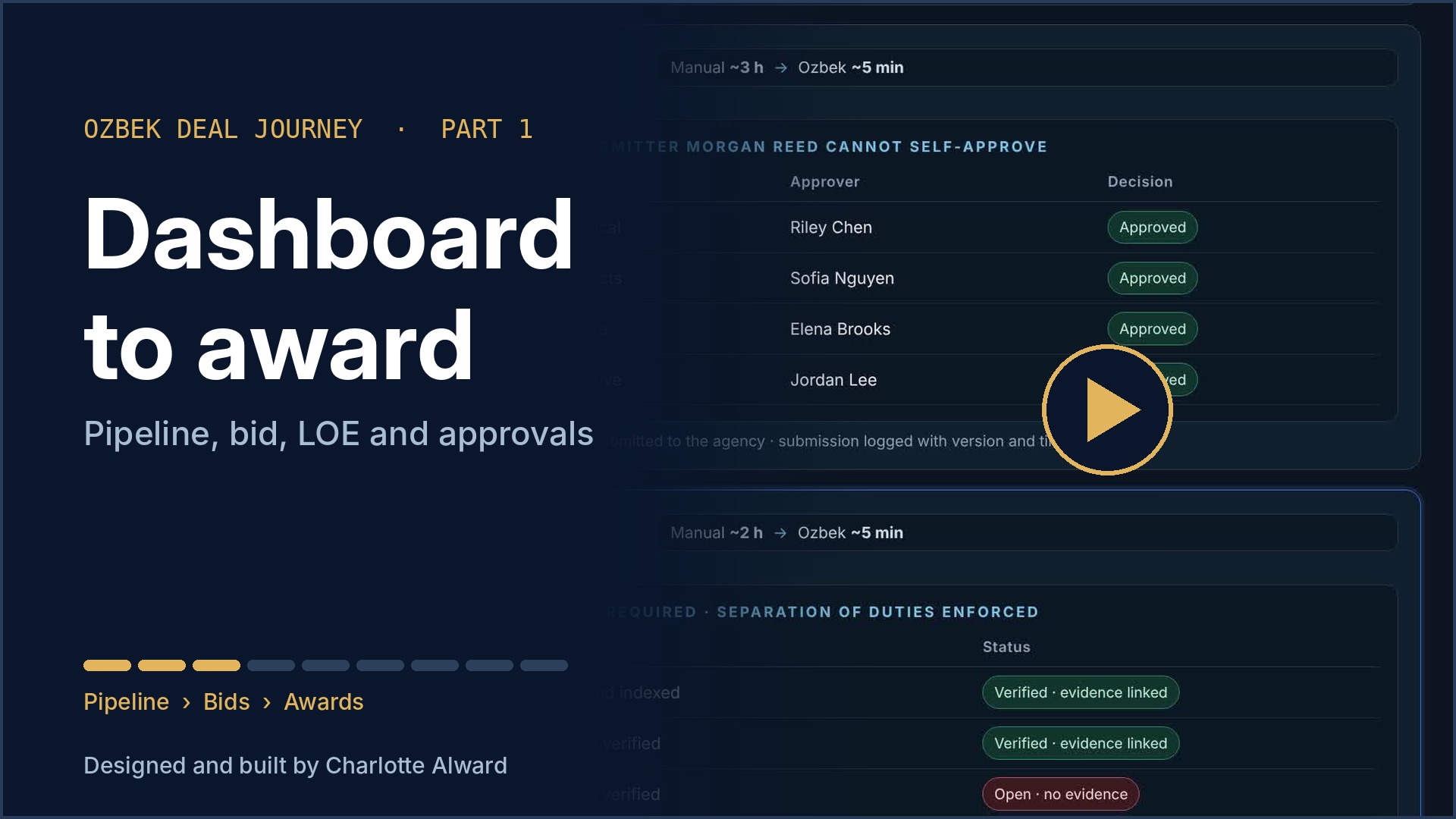 7:35
Part 1
A federal IT services opportunity moves from the pipeline through pricing, bid and approval to a signed award.
Watch Part 1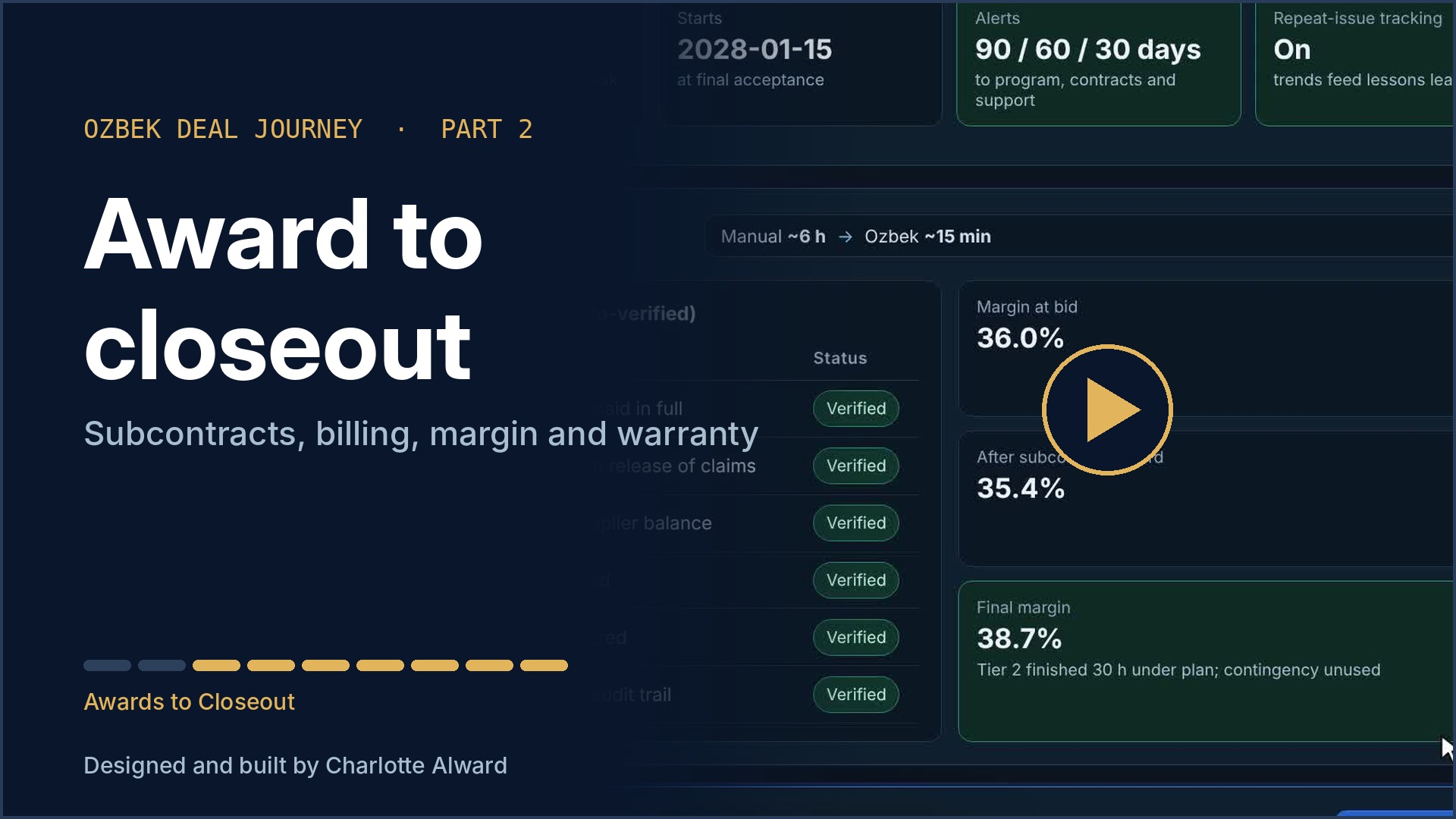 7:00
Part 2
The same deal carried through subcontracting, delivery, invoicing, margin and final closeout.
Watch Part 2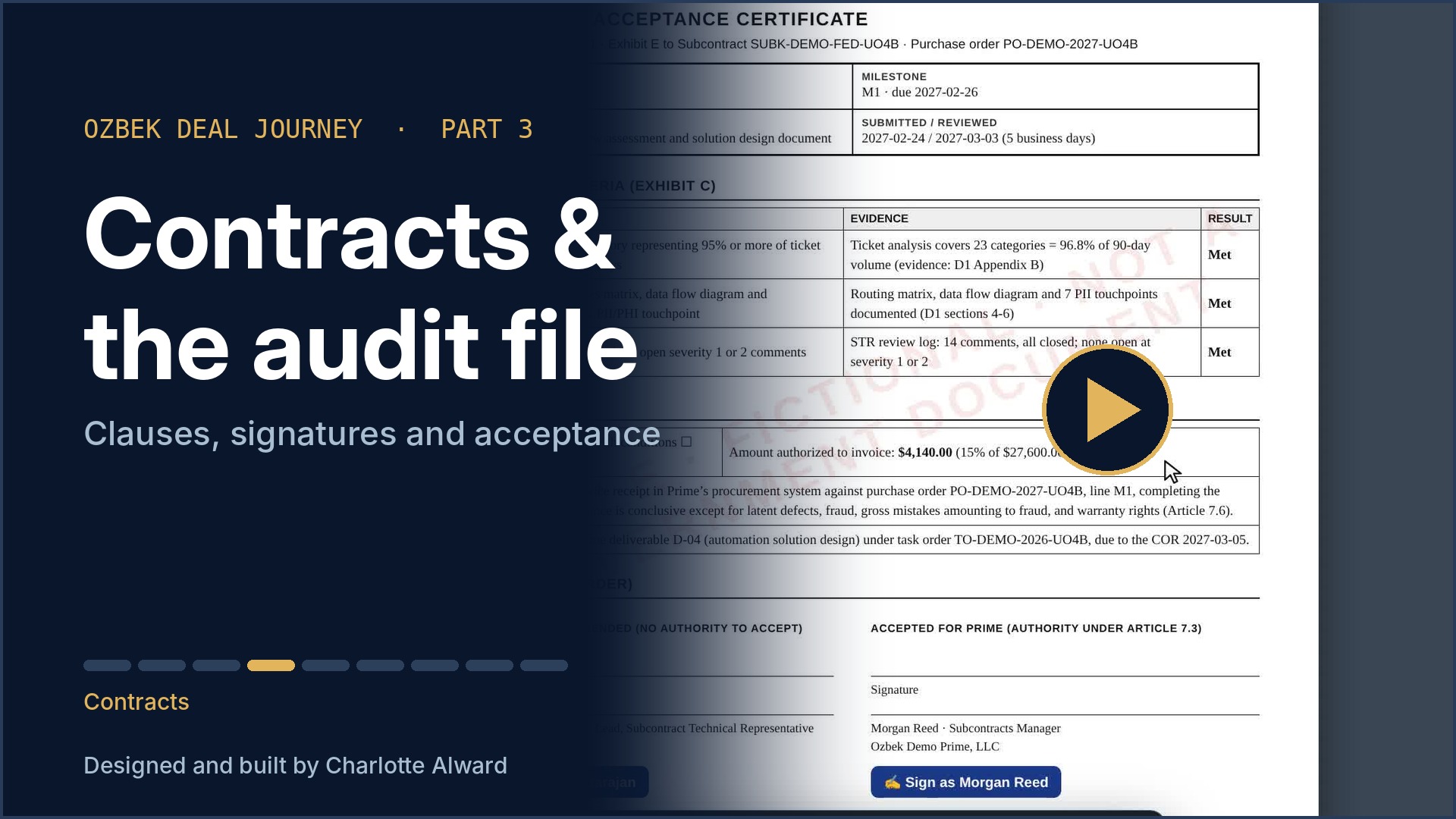 8:56
Part 3
A deep dive on automated clause checks, flow-downs, signed contract documents and an audit-ready file.
Watch Part 3The platform
The problem
Running federal subcontract portfolios, I watched the same pattern repeat. The pipeline lived in one system, pricing in spreadsheets, contracts and flow-downs in documents, and invoices and payables somewhere else. Deadlines, compliance requirements and margin all depended on people re-keying the same information and remembering what came next.
What I built
Core platform
One record that follows the work from first opportunity to final closeout.
Built-in controls
Checks and sign-offs designed in, not bolted on after the fact.
Automated regulatory checks
Most teams check compliance at the end, when fixing a problem is expensive. In Ozbek, the rules are part of the record, so every change is checked the moment it happens.
Ozbek is a working prototype demonstrated with fictional data. Clause status reflects research as of October 2026.
The expertise behind it
Ozbek is built on the same skills I bring to any organization: understanding how work actually flows, turning policy into practice, and getting people to adopt the change.
Mapping where work stalls, measuring handoffs and cycle time, and redesigning the process with Lean Six Sigma discipline before automating it.
Turning operational data into reporting leaders act on. My reports went to executive Sales, Operations, Finance and Program leadership.
Mapping regulations to internal policy to step-level procedures, so every requirement has an owner, a control and evidence it was met.
Taking tools from design to daily use, including approval workflows, trackers and databases built in Oracle APEX, SharePoint and Power Automate.
Building the guidance and hands-on support that make a new process stick, from frontline staff to leadership.
Leading people through new ways of working, from tiger teams to soldiers overseas, with clear expectations and steady follow-through.
What this shows
Ozbek brings together my federal subcontracts and supplier experience, Lean Six Sigma process design, and hands-on AI product development. It is still in active development, with production mode underway across all modules, and I'm documenting the build as it grows.
"Excellence is never an accident; it is the result of high intention, sincere effort,
intelligent direction, skillful execution and the vision to see obstacles as opportunities."
— ANONYMOUSLET'S CONNECTI'm always open to conversations about contracts, operations, process transformation, systems improvement, and meaningful work where better structure can create better outcomes.
CONTACT ME